Sustainable Bulk Liquid Packaging

Sustainability in Bulk Liquid Logistics: How Flexitanks Reduce Carbon Footprint

In the modern industrial landscape, optimizing bulk liquid logistics has become a top priority for companies seeking true environmental sustainability. Traditional transport methods often drain corporate resources and leave a massive environmental impact across global supply chains. Efficient shipping now demands smarter packaging solutions that streamline your distribution, much like how a motion continuous flow reactor optimizes chemical processing through constant efficiency. By shifting toward innovative fluid packaging systems, global businesses can drastically lower greenhouse gas emissions and transform their entire supply chain into a clean operation.

The global push for green logistics is no longer a distant regulatory requirement. It is an immediate commercial necessity. Shippers are moving away from heavy steel drums and rigid intermediate bulk containers because these older methods carry hidden environmental costs. Heavy packaging increases total vehicle weight, which directly triggers higher fuel consumption during transit. Furthermore, cleaning reusable containers requires vast amounts of water and harsh chemical detergents, creating a secondary pollution cycle.

Why Modern Bulk Liquid Logistics Demands Eco-Friendly Innovation

The logistics sector contributes significantly to global carbon emissions. Therefore, reducing the carbon footprint of every shipment is vital. Traditional logistics relies heavily on round trip transportation models. When ISO tanks or steel drums are used, they must be shipped back to their origin after unloading. This means trucks and ships are frequently moving empty containers across thousands of miles.

This empty return leg doubles the transport emissions for a single cargo delivery. It creates an unsustainable cycle of waste and fuel burn. By contrast, converting standard twenty-foot dry containers into high-capacity liquid carriers completely eliminates this logistical headache. It allows companies to maximise every single mile travelled.

Direct Ways Flexitanks Minimise Environmental Impact

The adoption of flexible engineering within standard shipping containers fundamentally alters the sustainability equation. Here is exactly how these systems reduce your corporate carbon footprint.

  • Eliminating Return Logistics Completely

Flexitanks are designed for one-way transport. Once the liquid cargo reaches its final destination, the bladder is unloaded and removed. There is absolutely no need to ship an empty container back to the starting point. The dry container remains at the destination port, ready to be utilised immediately for general dry cargo exports. This simple change halves the required transport distance for the container shell, directly lowering carbon emissions.

  • Maximising Payload Volume and Reducing Trips

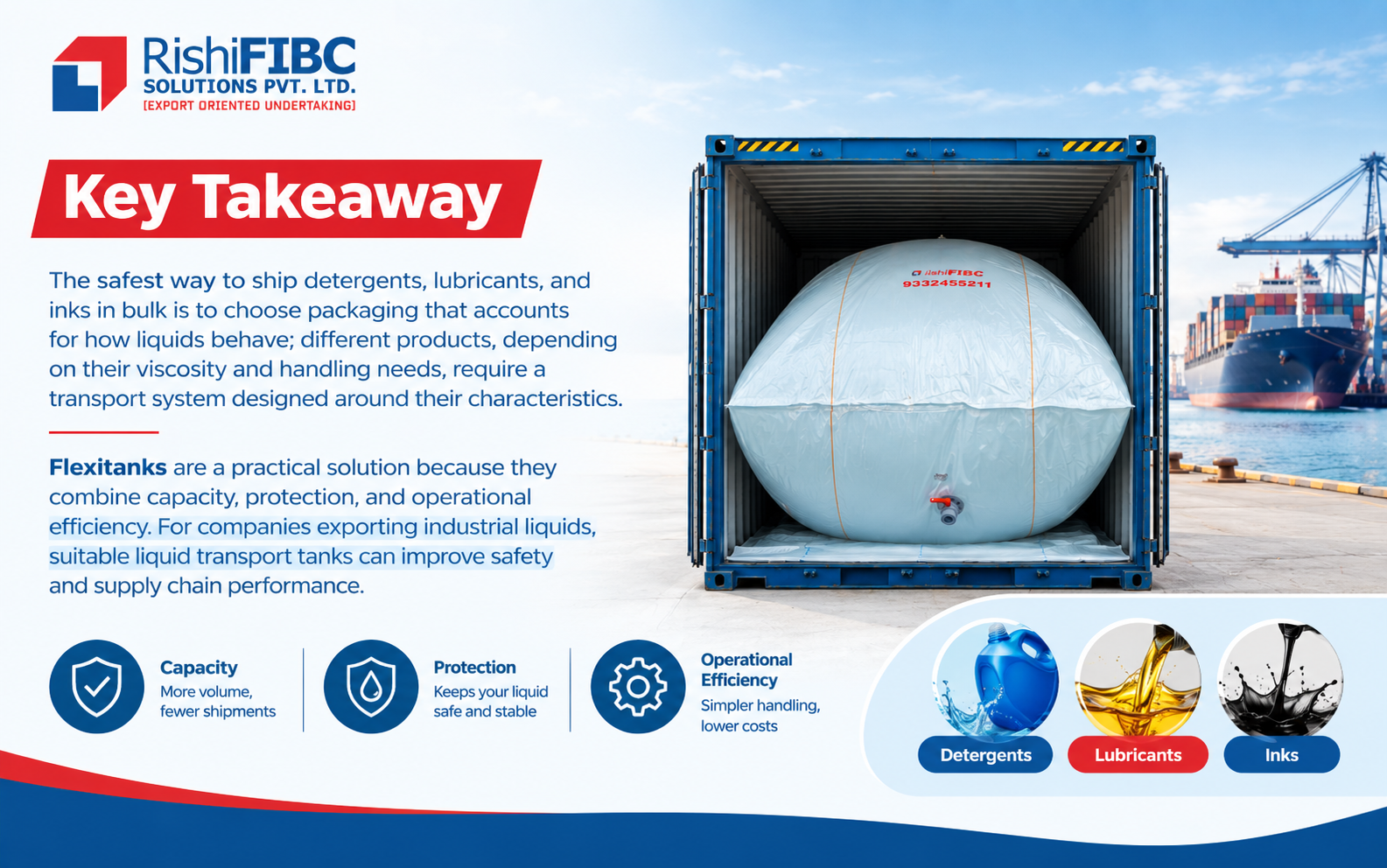
An ultra-lightweight polymer bladder lets you pack more product in a single container. A flexitank can carry up to twenty-four thousand litres of non-hazardous liquid cargo. This volume is roughly 40% higher than what can fit into a standard drum shipment inside the same space.

By carrying more liquid per container, you require fewer total shipments to move the same volume of product. Fewer shipments mean fewer trucks on the road and fewer vessels at sea, leading to an immediate drop in fuel consumption.

  • Cutting Out Chemical Cleaning Cycles

Reusable steel tanks must undergo intense high-pressure washing between shipments to avoid cross-contamination. This cleaning process consumes thousands of gallons of clean water and utilises aggressive chemical solvents. Managing the toxic wastewater runoff adds another layer of environmental stress. Because modern industrial bladders are single-use items manufactured from food-grade virgin polymers, they require zero cleaning. They offer a pristine environment for every batch without wasting natural resources.

Optimising Bulk Liquid Logistics Operations

Efficiency at the loading dock is just as critical as efficiency on the open ocean. Utilising flexible systems vastly simplifies your bulk liquid transfer operations.

Traditional drum handling requires significant manual labour, the use of forklifts, and considerable time to load or unload individual units. This prolonged process keeps facility lights, machinery, and trucks idling for hours, which adds to the site’s carbon footprint.

Conversely, flexible bladders utilise direct pump systems for loading and discharging. Liquid is transferred smoothly at a controlled rate, dramatically cutting down truck turnaround times. Fast, automated transfer processes reduce energy consumption at the terminal. It creates a highly streamlined supply chain that operates with minimal physical waste and lower localised emissions.

Partnering with a Premier Flexitank Manufacturer in India

Achieving your corporate sustainability goals requires working with an authoritative partner who understands the strict engineering requirements of liquid logistics. As a leading Flexitank Manufacturer in India, Fluid Flexitank designs advanced multi layered containment systems that guarantee zero leaks and maximum product protection.

Our manufacturing processes follow strict international quality controls. We combine heavy duty outer woven fabrics with high barrier inner liners. This advanced engineering ensures that your liquid cargo remains perfectly secure throughout transit, preventing environmental contamination from accidental spills. We provide the reliable tools your business needs to reduce freight costs while actively protecting the planet.

Conclusion: Your Path to Greener Logistics

Embracing sustainability in your supply chain is a powerful way to reduce operational waste and protect global ecosystems. Flexible transport solutions provide a proven framework to optimize your bulk liquid logistics by maximizing payloads, eliminating empty return trips, and removing the need for wasteful chemical cleaning. It is a highly effective operational strategy that benefits both your corporate bottom line and the global environment.

Do not let outdated shipping methods slow down your corporate sustainability progress or inflate your transport budgets. It is time to upgrade to a cleaner, more efficient distribution network.

Partner with an industry leader to transform your shipping operations. Contact Fluid Flexitank today to secure premium, eco friendly containment systems designed for your specific business requirements.

Optimize Your Bulk Liquid Logistics with Fluid Flexitank

FAQ

They eliminate the return journey required by traditional containers. Because they are lightweight and carry up to forty percent more volume than drums, fewer trucks and ships are required, drastically reducing total fuel burn.

Yes, reputable manufacturers construct them using one hundred per cent recyclable polyethene and polypropylene materials. After the liquid cargo is discharged, the bladders can be repurposed into industrial materials, preventing them from going to landfill.

They allow direct pumping into and out of the container, eliminating the manual handling of hundreds of drums. This speeds up loading cycles, reduces truck idling times, and lowers the localized energy use of facilities.

Yes, advanced manufacturers offer customised multi-layered designs. These include special oxygen barriers and robust woven outer layers that protect sensitive liquids from environmental degradation and prevent accidental transit leaks.

No, these systems are engineered and internationally certified exclusively for non-hazardous liquids. Shipping hazardous chemicals requires specialized rigid tank containers that comply with international dangerous goods transport regulations.

Flexitank Suppliers in India

From Factory to Port: The Role of Flexitanks in Chemical Supply Chains

Why Flexitank Suppliers in India Are Reshaping Chemical Logistics

The chemical industry depends on efficient and reliable logistics. From the moment liquid chemicals leave the factory until they reach the port, every stage of transport matters. This is why many exporters now rely on Flexitank Suppliers in India to improve safety, reduce costs, and simplify operations in modern chemical supply chains.

Traditional transport systems such as drums and intermediate bulk containers often create operational challenges. They increase handling time, reduce payload efficiency, and add packaging waste. Modern flexitank systems have changed this process completely. They convert a standard shipping container into a high-capacity liquid transport container designed for safe and efficient Bulk Liquid Transport.

For chemical manufacturers and exporters, this shift is not only practical. It is strategic.

Understanding the Role of Flexitanks in Chemical Supply Chains

Chemical logistics is more complex than general cargo movement. Liquids require controlled handling, reliable containment, and efficient loading systems. Even small delays can impact production schedules and export commitments.

This is where Flexitank Suppliers in India play a critical role. Flexitanks help move large volumes of non-hazardous chemicals through the supply chain with greater efficiency.

From Factory Loading to Port Movement

At the manufacturing site, flexitanks are installed inside a standard twenty-foot container. Liquids are pumped directly into the tank through a controlled loading system. This eliminates the need to handle multiple drums or containers individually.

Once loaded, the container moves seamlessly through:

  • Factory dispatch
  • Inland transport
  • Port handling
  • Ocean shipping
  • Destination discharge

The process reduces handling points and improves supply chain flow.

Why Chemical Exporters Prefer Flexitanks

  1. Higher Payload Capacity
    One of the biggest advantages of flexitanks is volume efficiency. Compared with drums, flexitanks can transport significantly more liquid in the same container space. This lowers freight cost per litre and improves shipment economics.

  2. Reduced Handling and Labour
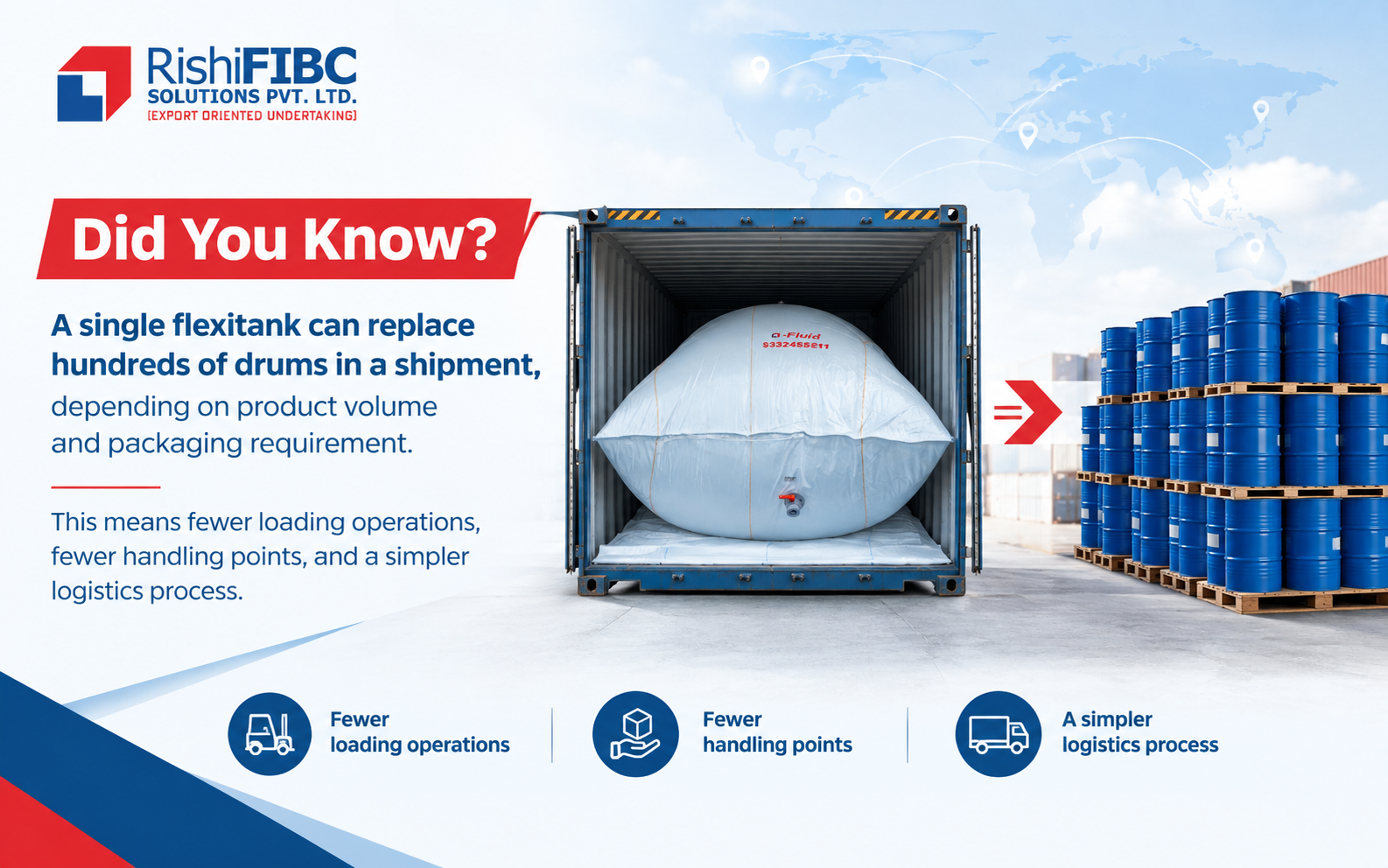
    Traditional packaging requires stacking, securing, and unloading hundreds of drums. Flexitanks simplify the process through pump-based loading and discharge systems. This saves labour and reduces operational delays.

  3. Improved Safety
    A properly engineered liquid transport container minimises leakage risk and protects cargo integrity. Multilayer polyethylene liners and reinforced outer layers provide strong containment during transport.

  4. Cleaner Supply Chain Operations
    Single-use flexitanks reduce contamination risk. This is especially important for sensitive liquid chemicals that require hygienic and residue-free transport environments.

How Flexitanks Support Modern Bulk Liquid Transport

The global chemical industry operates under increasing pressure to reduce costs while improving sustainability and efficiency. Flexitanks support these goals in several ways.

  1. Lower Packaging Waste
    Drums and rigid containers create additional waste and disposal costs. Flexitanks reduce secondary packaging requirements and improve operational efficiency.

  2. Faster Port Operations
    Ports operate on strict timelines. Delays during loading or unloading increase costs quickly. Flexitanks improve turnaround time because pumping systems make discharge faster and more predictable.

  3. Better Supply Chain Scalability
    As export demand increases, companies need transport systems that can scale efficiently. Flexitanks allow exporters to move larger liquid volumes without increasing container count significantly.

This is why Flexitank Suppliers in India have become important partners for growing chemical exporters.

Why Manufacturer Expertise Matters

Not all flexitank systems perform the same way. The reliability of the entire supply chain depends on engineering quality and operational expertise.

A trusted supplier should provide:

  • Food and chemical grade compliant materials
  • Strong multilayer construction
  • Leak resistant valve systems
  • Technical installation support
  • Proven testing and inspection procedures

Experienced Flexitank Suppliers in India understand the pressures involved in Bulk Liquid Transport and design systems that can withstand road vibration, hydrostatic pressure, and long sea voyages.

Fluid Flexitank and the Future of Chemical Logistics

Fluid Flexitank supports chemical exporters with engineered solutions built for operational reliability. Their systems help companies improve shipping efficiency while protecting cargo quality.

By combining strong material technology with practical logistics understanding, Fluid Flexitank contributes to safer and more efficient chemical supply chains from factory to port.

Build Smarter Chemical Supply Chains

Chemical logistics requires more than transportation capacity. It requires reliability, safety, and operational efficiency at every stage.

Flexitanks simplify Bulk Liquid Transport while helping exporters reduce handling costs and improve supply chain performance. For businesses involved in liquid chemical exports, working with experienced Flexitank Suppliers in India is a critical long term investment.


FAQs

  1. Why are Flexitank Suppliers in India important for chemical exports?
    Flexitank Suppliers in India provide engineered solutions that improve Bulk Liquid Transport efficiency, reduce handling costs, and support safer shipping of non-hazardous liquid chemicals.

  2. How do flexitanks improve chemical supply chains?
    Flexitanks simplify loading, transport, and discharge processes. They reduce packaging waste and improve operational efficiency across the chemical export supply chain.

  3. What type of chemicals can be transported in flexitanks?
    Flexitanks are commonly used for non-hazardous chemicals, industrial liquids, lubricants, liquid fertilisers, and other compatible liquid cargo.

  4. Why is a liquid transport container better than drums for exports?
    A liquid transport container using flexitank technology increases payload capacity, reduces labor, minimizes waste, and improves Bulk Liquid Transport efficiency compared with drums.
Non-Hazardous Chemicals

Flexitanks for Non-Hazardous Chemicals: What Makes Them Safe and Effective

The global chemical industry is undergoing a massive shift in its logistics. For years, exporters relied on heavy steel drums or expensive ISO tanks for the transport of non-hazardous chemicals. However, as profit margins tighten and sustainability becomes a priority, the industry is turning to a more agile solution: the flexitank. These high-tech, flexible bladders transform standard bulk liquid shipping containers into efficient, single-use transport systems. But what exactly makes them the gold standard for safety and effectiveness in the chemical sector?

What Are Flexitanks and Why Are They Safer?

A flexitank is a large, flexible bladder made of multiple polyethylene layers enclosed within a woven polypropylene outer layer. Installed inside a standard freight container, it can hold up to 24,000 liters of non-hazardous liquid.

So, what makes flexitanks safe and effective for chemical logistics?

✅ 1. Multi-Layered Protection Against Leaks

Each flexitank used in non-hazardous chemicals transport is designed with multiple internal layers. These layers not only resist punctures and abrasion but also provide chemical compatibility. This ensures that even aggressive liquids like certain plasticizers or emulsifiers don’t react with the container itself.

✅ 2. Single-Use, Sterile Packaging

Unlike ISO tanks or drums that are reused, flexitanks are single-use. This drastically reduces the risk of cross-contamination, which is vital when shipping high-purity or sensitive chemical products. After unloading, the flexitank is responsibly discarded or recycled.

✅ 3. COA Compliance and Quality Assurance

Reputable Flexitank manufacturers in India like Fluid Flexitanks comply with international standards such as the Container Owners Association (COA) Code of Practice, ensuring that every unit is safe, robust, and thoroughly tested before dispatch. COA compliance also ensures compatibility with major shipping lines.

Efficiency in Bulk Liquid Transport for Non-Hazardous Chemicals

Flexitanks don’t just promise safety — they deliver unmatched logistics efficiency for bulk liquid transport:

  • Higher Payload: Carries more volume than drums or IBCs in the same space
  • Faster Loading/Unloading: Requires only one hose connection — less manpower and lower labor cost
  • Zero Cleaning & Return Freight: Eliminates washing, storage, or backhaul costs
  • Eco-Friendly Disposal: Made from recyclable materials, they support sustainable logistics

For non-hazardous chemical companies aiming to reduce carbon footprint and shipping costs, this packaging innovation is game-changing.

Why Flexitanks Are the Ideal Bulk Liquid Shipping Containers for Non-Hazardous Chemicals

Here’s how flexitanks compare to traditional bulk liquid shipping containers when it comes to chemical transport:

Packaging Type

Return Freight

Cleaning Required

Contamination Risk

Payload

Environmental Impact

Steel Drums

No

No

Medium

Low

High

IBCs

No

Yes

Medium

Medium

Medium

ISO Tanks

Yes

Yes

Low

High

Low

Flexitanks

No

No

Low

High

Low (Recyclable)

Flexitanks optimize space, minimize handling, and maintain product integrity — all while reducing cost and complexity.

Applications in Chemical Industries

Fluid Flexitanks currently supports clients transporting:

  • Surfactants
  • Lubricants and base oils
  • Adjuvants
  • Glycerin
  • Sodium silicate
  • Latex and emulsions
  • Food-grade additives and oils

All these are non-hazardous in nature but require protective, contamination-free environments — a job flexitanks are well equipped for.

✅ Partnering with the Right Flexitank Manufacturer in India

Quality matters. Not all flexitanks are equal in performance and reliability. Fluid Flexitanks is an established flexitank manufacturer in India, delivering:

  • Certified, multi-layered flexitanks with high chemical compatibility
  • Pre-installation quality checks and container inspection
  • Global support for port loading/unloading
  • Optional accessories like heater pads for temperature-sensitive cargo

Our team works closely with exporters to assess chemical compatibility and ensure every shipment moves efficiently and safely.

✅ Make Your Chemical Supply Chain Safer and Smarter

From cost-savings to safety, flexitanks are changing the way non-hazardous chemical transport is managed globally. With zero compromise on quality and performance, Fluid Flexitanks helps exporters deliver bulk chemicals reliably — from the factory to the end-user, across continents.

📦 Ready to scale your chemical exports without scaling up your logistics costs?
Partner with Fluid Flexitanks for a cleaner, safer, and more cost-efficient solution.


FAQs:

  1. Can flexitanks carry all types of chemicals?
    Flexitanks are designed for non-hazardous chemicals only. They’re not suitable for corrosive or flammable materials but are ideal for surfactants, oils, lubricants, glycerin, and additives.
  2. Are flexitanks approved for chemical transport internationally?
    Yes. Fluid Flexitanks are COA-certified and widely accepted by major shipping lines worldwide, making them suitable for international bulk shipments of non-hazardous liquids.
  3. How do flexitanks prevent contamination?
    Flexitanks are single-use and built with multilayered food-grade polyethylene, ensuring no cross-contamination or residual risk from previous cargo.
  4. Are flexitanks environmentally friendly?
    Yes. Flexitanks eliminate secondary packaging waste and are made from recyclable materials, reducing the overall carbon footprint of your chemical supply chain.
Transporting Fertilizer and Plasticizer

Transporting Fertilizers and Plasticisers Safely in Flexitanks

The efficient global movement of essential industrial chemicals, specifically liquid fertilisers and plasticisers, is critical to the agriculture and manufacturing sectors. These substances, while generally classified as non-hazardous bulk liquids, demand meticulous handling to ensure safety, prevent contamination, and maintain product integrity. Fortunately, the use of flexitanks has emerged as a superior solution for liquid cargo transport, surpassing the limitations of traditional drums and IBCs.

A flexitank is a high-capacity, single-use polymer bag installed inside a standard 20-foot shipping container, transforming it into a safe, efficient vessel for Bulk Liquid Transport. For shippers involved in transporting fertiliser and plasticisers, the adoption of flexitanks offers significant cost savings and streamlined logistics, provided strict adherence to safety and chemical compatibility protocols is maintained.

Foundational Safety Practices for Bulk Liquid Transport

Regardless of the non-hazardous nature of the liquid, general safety guidelines must be strictly observed to prevent spills, leaks, and operational failure. These practices are the authoritative core of reliable liquid cargo transport.

1. Certification and Compatibility

The first step is selection. Always choose a flexitank from a reputable manufacturer certified to international standards. Crucially, the tank material must be chemically compatible with the specific product being shipped to prevent corrosion or degradation of the flexitank.

2. Container Vetting and Preparation

The integrity of the container is paramount. Before installation, a standard 20-foot dry-box container must be thoroughly inspected for sharp edges, debris, or rust that could puncture the polymer bladder. Use only a clean, dry container to eliminate contamination risk. Proper installation includes securely fitting the flexitank and installing a reinforced bulkhead or restraining system near the doors to prevent bulging during transit.

3. Operational Expertise and Control

Only personnel trained in flexitank installation, loading, and unloading procedures should be involved. Filling the tank must be executed at a controlled, steady rate to prevent material stress and overloading. Once filled, the valve must be securely locked and sealed.

4. Temperature Monitoring and Declaration

Temperature variations can affect both the viscosity of the liquid and the material properties of the flexitank. For liquids that may thicken (such as some liquid plasticisers), systems with built-in heating capabilities can ensure smooth and efficient unloading. All contents must be accurately declared in shipping documents and clearly labelled on the container for proper liquid cargo transport handling and regulatory adherence.

Product-Specific Requirements: Transporting Fertilizer and Plasticizers

Transporting Fertiliser

Liquid fertilisers, vital for global crop production, are often shipped in concentrated forms.

  • Chemical Compatibility: The flexitank material must resist the chemical composition of the fertilizer. A reputable supplier will confirm the polymer layers are non-reactive and corrosion-resistant, protecting both the tank and the valuable agricultural product within.
  • Environmental Protection: Flexitanks provide a sealed, controlled environment. This is essential because many liquid fertilizers are sensitive to external elements, which can compromise their efficacy before application.
  • Sustainability Advantage: Moving concentrated liquid fertilizers via Bulk Liquid Transport in flexitanks drastically reduces the total number of shipments required compared to shipping in drums. This not only cuts down logistics costs but also significantly lowers the overall carbon footprint of the supply chain, aligning with modern sustainability goals.

Transporting Plasticizers

Plasticizers are chemical additives used to increase the flexibility and durability of plastics and polymers.

  • Corrosivity Resistance: Some plasticizers can be aggressive. For these, the flexitank fabric must offer advanced corrosivity resistance. Leading manufacturers often use multi-layered designs with specialized barrier technology to prevent chemical attack on the tank material.
  • Specialized Barriers (EVOH): To preserve the quality and chemical integrity of sensitive plasticizers, barrier flexitanks are recommended. These often incorporate a special inner layer, such as Ethylene Vinyl Alcohol (EVOH), which acts as a powerful barrier against oxygen and moisture ingress, preventing contamination and degradation of the product quality.
  • Quality Preservation: The hermetically sealed nature of the flexitank ensures the plasticizer arrives in the same high-quality condition it was loaded in. This is critical for manufacturers who rely on precise chemical specifications for their end products.

The Value of an Expert Partner in Bulk Liquid Transport

Choosing an experienced flexitank supplier transforms your liquid cargo transport from a logistical hurdle into a competitive advantage. An expert partner understands the nuances of transporting fertilizer and plasticizers, offering not just a product, but a complete, certified system that minimizes risk and maximizes efficiency. Their knowledge of chemical compatibility, international regulations, and product-specific handling is invaluable.

By investing in high-quality, certified flexitanks and strictly following established safety protocols, businesses can confidently leverage the volume and cost benefits of Bulk Liquid Transport for these crucial industrial materials. Safety and compliance are the ultimate measures of effective logistics.

The Secure Choice for Industrial Liquids

Transporting fertilizer and plasticizers in flexitanks is proven to be an efficient, cost-effective, and environmentally conscious method for Bulk Liquid Transport. Success is predicated on careful material selection (ensuring chemical compatibility) and strict adherence to COA-certified installation and loading procedures. By choosing specialized flexitanks with appropriate barriers and safety features, you safeguard your product’s quality and ensure global compliance.

It is time to choose a certified partner dedicated to the secure and efficient transport of your vital industrial liquids.

Ready to enhance your liquid cargo transport safety and efficiency? Contact Fluid Flexitank today to secure expert-backed solutions for transporting fertilizer and plasticizers.

Flexi tanks Containers

Bulk Transport of Fructose, Sorbitol, and Corn Syrup with Flexitanks

The global food and beverage industry continually seeks to improve efficiency without compromising safety or quality. For shippers handling high-volume sweeteners such as fructose, sorbitol, and corn syrup, traditional packaging—drums, barrels, or IBCs—is often inefficient, costly, and environmentally burdensome. The solution? Flexi tanks containers. These innovative bulk liquid transport systems have revolutionised the way these viscous, sensitive liquids are moved across oceans and continents, offering a compelling blend of cost savings, hygiene, and operational ease.

A flexitank is a high-capacity, flexible, single-use polymer bladder designed to be installed inside a standard 20-foot dry-box shipping container. This simple integration transforms a standard container into a safe, sterile, and highly efficient vessel for transporting liquid cargo. While the process is highly effective, the high viscosity and temperature sensitivity of syrups require specialised handling to ensure a smooth journey from origin to destination.

Understanding the Nature of Fructose, Sorbitol, and Corn Syrup

Fructose, sorbitol, and corn syrup are highly viscous liquids, meaning they flow slowly and can thicken in cold conditions. Their high sugar content and temperature sensitivity require specialised logistics handling.

Any lapse in transportation conditions can affect texture, colour, and even sweetness, impacting end-product quality. Flexitanks provide a sealed, temperature-controlled, and contamination-free environment that protects these delicate products during long-distance shipments.

Why Flexi Tanks Containers Are the Ideal Choice

  1. Maximise Capacity, Minimise Cost
    A single flexitank can safely carry up to 24,000 litres. This is a significantly higher volume than can be shipped using multiple drums or intermediate bulk containers (IBCs) within the same 20-foot container space. This volume maximisation directly reduces overall freight costs per unit and minimises the labour and equipment required for handling individual packages.

  2. Guaranteed Hygiene and Purity
    Flexitanks are single-use and constructed from food-grade, sterile materials. This ensures that the product is transported in a completely clean environment, eliminating the significant risk of cross-contamination inherent with reusable containers. High standards of hygiene are non-negotiable for transporting food-grade liquid cargo.

  3. Boost Operational Efficiency
    Manually loading and unloading hundreds of drums is slow and labour-intensive. Flexitanks, conversely, are loaded and discharged using streamlined pumping systems. This automation significantly reduces turnaround times, enabling quicker port cycles and a more efficient supply chain.

Eco-Friendly Bulk Liquid Transport

Flexi tanks containers eliminate the need for heavy, often non-recyclable packaging. The materials used in modern flexitanks are 100% recyclable, making the bulk liquid transport process a more sustainable and environmentally conscious choice.

Navigating the Challenges: Key Considerations for Syrup Transport

Fructose, sorbitol, and corn syrup are highly viscous liquids. Successful bulk liquid transport requires careful pre-planning, primarily focused on managing temperature to ensure smooth discharge.

Temperature Control is Crucial 

  • Primary Challenge: Viscosity increases sharply as syrup cools, making discharge slow, difficult, and potentially wasteful.
  • Heating Solutions: Specialised flexitank systems use integrated heating elements or pads (hot water/steam) to raise product temperature just before discharge, restoring pumpable viscosity.
  • Insulation: Sensitive syrups may require thermal insulation within the flexitank or transport in refrigerated containers (reefers) to maintain a stable temperature.

Pre-Loading Inspection and Preparation 

  • Container Selection: Use only robust 20-foot dry-box containers with a minimum 30-tonne weight rating and sound corrugated sidewalls.
  • Container Preparation: Meticulously inspect the interior of the container for rust, sharp edges, or debris. Install a protective corrugated lining and a reinforced bulkhead to brace the flexitank during transit.

Safe Loading and Final Discharge

  • Controlled Rate: Fill and empty the flexitank at a steady, controlled rate to prevent over-pressurisation and potential damage to the tank or container structure.
  • Valve Security: Sterilise and securely fasten all inlet and outlet valves before and after use to prevent contamination and leaks.
  • Maximising Recovery: Use an efficient pump for rapid unloading. For maximum product recovery, the flexitank can be strategically rolled towards the valve to push out remaining syrup.

Fluid Flexitank – The Smart Choice for Syrups

The reliable bulk liquid transport of fructose, sorbitol, and corn syrup demands a sophisticated packaging solution. Flexi tanks containers meet this demand, offering unmatched efficiency, superior hygiene, and significant cost reductions over traditional methods. By adhering to specialised protocols for viscosity management and container preparation, shippers can leverage the full potential of this technology.

It’s time to move your sweet goods smarter, safer, and more sustainably. Streamline your supply chain and ensure product quality by selecting an experienced partner.

Ready to optimise your liquid cargo transport? Contact Fluid Flexitank today to discuss how their custom-engineered solutions can transform your bulk liquid logistics.


bulk juice and wine transport

Why Flexitanks Are Ideal for Bulk Wine and Juice Shipping

Bulk Wine Shipping: Modern Needs Demand Smarter Solutions

The global wine and juice industries are evolving. With rising international demand and a growing focus on cost optimisation, logistics managers and exporters are seeking reliable and scalable bulk wine shipping methods that preserve product integrity. Traditional options like barrels, bottles, and IBCs are inefficient, unhygienic, and unsustainable.

Flexitanks are revolutionising bulk wine transportation, providing a clean, cost-effective, and safe method for moving large volumes of non-carbonated beverages worldwide. From boutique wineries to large juice producers, businesses are choosing fluid flexitanks to streamline their supply chain without compromising on quality.

Challenges in Traditional Juice and Wine Shipping

Wine and juice are delicate products. They are both sensitive to temperature, oxygen exposure, and contamination. Traditional packaging methods like glass bottles and steel drums often lead to:

  • Higher freight costs due to lower payload capacity
  • Increased risk of breakage or leakage
  • Oxygen contamination is impacting aroma and taste
  • Intensive handling and labour costs
  • Excess packaging waste

As the demand for bulk export grows, the industry needs smarter wine transport solutions that ensure purity, efficiency, and compliance with food safety standards.

Why Flexitanks Work for Bulk Wine and Juice Shipping

✅ 1. High Payload, Lower Cost

One of the most compelling advantages of flexitanks is their ability to carry up to 24,000 liters of liquid in a single 20-foot container. This results in 30–40% more product per shipment compared to drums or IBCs. More product per trip means reduced freight cost per litre, a significant win for exporters.

✅ 2. Food-Grade Safety and Hygiene

Flexitanks from Fluid Flexitanks are constructed using multi-layered virgin polyethylene, compliant with FDA, BGA, and EC standards for food-grade products. These wine transport tanks are single-use, ensuring there’s zero risk of cross-contamination from previous cargo.

✅ 3. Reduced Packaging Waste

Flexitanks eliminate the need for bottles, crates, or heavy secondary packaging. After use, they can be fully recycled. This supports sustainability goals while lowering handling and disposal costs — an important consideration for environmentally-conscious brands.

✅ 4. Preservation of Product Quality

Flexitanks are airtight and oxygen-free, ensuring that the product doesn’t oxidize during transit. This is particularly important for wines, juices, and concentrates, which can lose their flavour or freshness if exposed to air or contaminants.

✅ 5. Faster Loading and Discharge

Flexitanks simplify operations at both ends of the logistics chain. They can be filled quickly using gravity or pump systems and unloaded efficiently without extensive manpower. For high-volume shippers, this translates to lower port charges and quicker turnaround.

Wine Transport Tanks Designed for Global Trade

Fluid Flexitanks offers wine transport tanks engineered specifically for bulk wine and juice shipping. Each tank is tested for strength, compatibility, and hygiene. Optional heater pads are available to ease discharge in cold-climate ports where juices or tallow-like liquids might thicken.

Exporters shipping to the US, EU, and Asia have reported major improvements in efficiency, product quality, and freight savings using Fluid Flexitank systems.

Applications in Wine and Juice Supply Chains

Flexitanks are now widely used across:

  • Red and white wine bulk exports
  • Grape must and concentrate shipping
  • Tropical fruit juices like mango and guava
  • Citrus concentrates and Not from Concentrate juices
  • Organic or preservative-free beverages

They are ideal for long-haul transportation by sea, rail, or road. Whether you’re a vineyard in Italy or a juice producer in Maharashtra, flexitanks make global reach simpler.

Make Every Shipment Efficient – Choose Fluid Flexitanks

If you’re in the business of wine or juice exports, it’s time to rethink your shipping strategy. Flexitanks are not just containers; they are a logistics upgrade.

Fluid Flexitanks provides bulk wine transportation solutions that offer better hygiene, reduced costs, and unmatched reliability. From quality control to on-site support, our team ensures you have the right tank for every product and destination.

Reach out to our experts today and find out how Fluid Flexitanks can improve your wine or juice export process, one shipment at a time.


Bulk chemical Transport_Fluid Flexitank

Why Chemical Exporters Trust Fluid Flexitanks for Safe, Efficient Deliveries

Rising Demand and Innovation in Chemical Bulk Transport

Global demand for chemical bulk transport is growing at an unprecedented rate. According to a 2025 report by DataIntelo, the flexitank market for oils and chemicals is projected to reach USD 2.3 billion by 2030, growing at a CAGR of over 18%. The shift is driven by exporters seeking safer, cleaner, and more cost-efficient ways to move non-hazardous chemicals across long distances.

Traditional shipping methods, such as ISO tanks, drums, and IBCs, are being gradually replaced by flexible, high-capacity bulk liquid transport solutions. Among these, Fluid Flexitanks has emerged as a trusted name for exporters around the world, ensuring every drop of product reaches its destination safely and efficiently.

Challenges in Chemical Bulk Transport

Shipping chemicals requires precision, safety, and compliance. Exporters face several challenges:

  • Contamination risks: Reusable containers often retain residues from previous loads.
  • High logistics costs: ISO tanks require cleaning, return freight, and depot maintenance.
  • Handling complexity: Traditional packaging demands labour-intensive loading and unloading.
  • Limited payload: Drums and IBCs use extra space, reducing cost efficiency.

In an industry where delays or contamination can lead to significant financial losses, exporters are turning to Fluid Flexitanks, a solution that merges innovation with reliability.

Why Flexitanks Are the Preferred Choice for Bulk Chemical Transport

✅ 1. Maximum Payload Capacity

A single flexitank can carry up to 24,000 liters of non-hazardous chemicals, almost 30% more volume than drums or IBCs in the same 20-foot container. This translates to fewer shipments and reduced per-unit transport costs, which is a major advantage for high-volume exporters.

✅ 2. Single-Use, Contamination-Free Design

Each Fluid Flexitank is brand new, ensuring zero contamination risk. Unlike reusable ISO tanks, they do not require cleaning or sterilisation, making them ideal for sensitive or high-purity chemical products.

✅ 3. Lower Operational Costs

Flexitanks are a one-way cost system; after discharge, they can be recycled, saving on return freight and depot storage. The simplified logistics chain improves turnaround time and reduces administrative overhead.

✅ 4. Compatibility and Strength

Made with multi-layered polyethylene and polypropylene, Fluid Flexitanks are resistant to many chemical formulations, including lubricants, base oils, and emulsions. Their seamless construction reduces the risk of abrasion and rupture during long-distance travel.

✅ 5. Environmentally Responsible

Each flexitank is made from fully recyclable materials that minimize waste. By cutting return trips and reducing packaging materials, Fluid Flexitanks support sustainability goals in modern supply chains.

Engineering That Builds Trust

At the core of Fluid Flexitanks’ success lies superior engineering. Every flexitank undergoes rigorous QC testing, from raw materials like PE film and valves to final-stage assembly. The in-house testing process ensures:

  • Tensile strength and stretch resilience
  • Seam integrity and pressure resistance
  • Chemical compatibility and leak-proof assurance

Fluid Flexitanks also comply with FDA, BGA, and CIQ regulations, making them ideal for chemical and food-grade applications alike.

As a leading Flexitank manufacturer in India, the company’s focus on continuous improvement, safety, and material innovation positions it as a preferred partner for exporters across Europe, the Middle East, and Asia-Pacific.

Safety and Compliance: A Non-Negotiable Factor

Chemical logistics demands adherence to strict safety protocols. Fluid Flexitanks are engineered with safety valves, air vents, and anti-burst reinforcements that protect against pressure surges. Their flexible design adapts to varying densities and viscosities of liquids such as lubricants, surfactants, and emulsions.

Additionally, their multi-ply construction prevents leaks even in challenging maritime conditions. Combined with strong technical documentation and compliance support, Fluid Flexitanks offer exporters a complete, worry-free solution for chemical bulk transport.

Market Trends: Why Exporters Are Switching to Flexitanks

According to logistics industry insights from 2025, more than 65% of chemical exporters in emerging economies have begun shifting from drums and ISO tanks to flexitanks. The reasons are clear:

  • 20–30% cost reduction per shipment
  • Faster loading/unloading with lower manual handling
  • Better space utilisation in 20-foot containers
  • Reduced carbon footprint in global transport

For many exporters, the switch to Fluid Flexitanks has translated into improved margins, safer shipments, and simplified logistics operations.


Make Every Shipment Count – Choose Fluid Flexitanks

In the competitive world of chemical exports, product safety and cost efficiency are critical. Fluid Flexitanks provide both.

As an experienced Flexitank manufacturer in India, we ensure every product is engineered to handle the most demanding bulk liquid transport requirements.

If you want to reduce operational costs, improve logistics efficiency, and ensure contamination-free deliveries, it’s time to trust Fluid Flexitanks, where reliability meets innovation.


FAQs

Q1: Are Flexitanks safe for aggressive or hazardous chemicals? 

A: Flexitanks are specifically designed and certified for the safe bulk transportation of non-hazardous liquid chemicals, such as industrial lubricants and liquid fertilisers. Hazardous materials require specialised, high-pressure ISO tanks due to strict international regulations.

  1. How do Flexitanks contribute to a chemical exporter’s sustainability goals? 

A: Flexitanks are recyclable and significantly reduce the need for secondary packaging, like wooden pallets. Their single-use design also eliminates the substantial carbon footprint associated with cleaning and returning rigid tank containers across long distances.

Q3: Do Flexitanks require specialised equipment or containers for use? 

A: No, Flexitanks are designed to fit seamlessly into any standard 20-foot dry van shipping container, instantly converting it into a secure, single-use liquid carrier. Minimal, easy-to-use equipment is needed for the fast loading and discharge process.

Q4: What market indicators show that Flexitanks are a long-term, reliable solution? 

A: The global market for Flexitanks in the chemical sector is projected to reach USD 3.66 billion by 2033, growing at a CAGR of 16.4%. This robust growth reflects authoritative industry commitment and trust in the technology’s long-term viability.

Chemical Shipping

Why the Chemical Industry Is Embracing Flexitanks for Safer Shipping

The chemical sector faces unique challenges in the ever-evolving logistics and transportation industry. The nature of chemicals demands high safety standards, reliability, and cost efficiency during transport. In recent years, Flexitanks have emerged as a preferred solution for bulk chemical transport due to their safety features, flexibility, and ability to lower costs.

The Shift to Flexitanks in Chemical Bulk Transport

Traditional methods of chemical bulk transport using ISO tanks or drums are often costly and time-intensive. Chemical manufacturers seek smarter, scalable shipping solutions as the global market expands. That’s where Flexitanks step in.

Flexitanks are large, multi-layered bladders made of polyethylene and polypropylene. They are designed to fit inside standard 20-foot containers, instantly converting them into safe carriers for non-hazardous chemicals.

Why Flexitanks Are Gaining Popularity in the Chemical Industry

Here are the main reasons why Flexitanks are being adopted across chemical logistics:

1. Enhanced Safety and Contamination Control

  • Flexitanks are designed for single use, ensuring that each shipment is protected from residue or contamination from previous cargo.
  • Their multi-layer construction prevents leaks and ensures chemical integrity.

2. Cost Efficiency

  • Flexitanks offer up to 30% more payload capacity than traditional drums or IBCs.
  • No cleaning or return logistics are required, making them ideal for one-way international shipping.

3. Reduced Environmental Impact

  • Flexitanks are recyclable, making them an eco-friendly option for bulk shipping.
  • Reduced use of secondary packaging and pallets helps lower the overall carbon footprint.

4. Easy Handling and Quick Turnaround

  • Flexitanks can be loaded and unloaded faster than rigid containers.
  • Minimal manpower is needed, which simplifies logistics and speeds up delivery times.

When to Choose Flexitanks for Bulk Chemical Transport

Flexitanks are suitable for:

  • Non-hazardous liquid chemicals like lubricants, surfactants, fertilizers, glycerine, and latex.
  • Long-haul international shipping is expensive due to return logistics.
  • Companies are looking to optimize payload per container and reduce logistics overhead.

Ready to Upgrade Your Chemical Shipping Strategy?

If you’re looking to streamline your bulk chemical logistics while maintaining the highest safety standards, Flexitanks are the smart choice. Partner with Fluid Flexitank, India’s trusted name in flexitank solutions, to optimize your supply chain, reduce costs, and ensure product integrity. Contact us today to discuss your chemical transport needs and discover how Flexitanks can transform your shipping operations.


FAQ

Q1. Are flexitanks safe for transporting chemicals?
A:  Yes, Flexitanks are made of durable, multi-layered materials that prevent leaks and contamination.

Q2. What types of chemicals can be transported in Flexitanks?
A:  They are ideal for non-hazardous chemicals like lubricants, latex, surfactants, and fertilizers.

Q3. Do Flexitanks meet global safety standards?
A:  Yes, reliable manufacturers produce Flexitanks that comply with PAS 1008:2016 and FDA guidelines.

Q4. Can Flexitanks reduce shipping costs?
A:  Absolutely. Flexitanks increase payload capacity, reduce labour, and eliminate return logistics, leading to lower costs.

Food-Grade Liquid Transportation

How Flexitanks Improve Food-Grade Liquid Transportation Across Borders

In the global food and beverage industry, transporting food-grade liquids across borders must be safe, efficient, and cost-effective. Traditional methods like drums and intermediate bulk containers (IBCS) often struggle with high costs and contamination risks. Flexitanks have emerged as a game-changing solution, transforming how companies handle cross-border shipments of edible oils, juices, concentrates, and other consumable liquids. This article examines how flexitanks provide a safe and efficient solution for cross-border shipments of food-grade liquids, ensuring quality and compliance.

Challenges in Food-Grade Liquid Transportation Across Borders

Transporting large volumes of edible liquids internationally presents several challenges:

  • Maintaining Purity and Quality: Food-grade liquids can be easily contaminated by even trace amounts of impurities if not appropriately handled. Ensuring a hygienic, sealed environment during transit is crucial to keep products safe for consumption upon arrival.
  • High Packaging and Logistics Costs: Using 55-gallon drums or IBC totes requires extensive packaging, handling, and storage space. These traditional containers often utilize only a fraction of a shipping container’s capacity, leading to more shipments and higher freight costs.
  • Regulatory Compliance: Cross-border shipments are subject to strict and varied food safety regulations in each country. Any leakage can result in costly fines or rejected shipments. Meeting global standards in bulk liquid transport is non-negotiable for smooth customs clearance.

Flexitanks: A Revolutionary Solution for Food-Grade Liquid Transportation

Flexitanks are flexible, high-capacity bladders that fit into standard 20-foot shipping containers, turning them into bulk liquid carriers. These single-use, disposable tanks are made from multiple layers of tough polyethylene with an outer layer of polypropylene.

  • Higher Capacity, Lower Costs: One flexitank carries up to 24,000 litres, maximizing a container’s capacity. Fewer containers are needed, which lowers overall freight costs per liquid unit.
  • Maintained Quality and Hygiene: Made of food-grade, single-use material, flexitanks provide a clean, sealed environment that eliminates contamination risk. Edible liquids remain pure from origin to destination.
  • Faster Loading and Unloading: Filling one large flexitank is much quicker and easier than handling dozens of drums. Pumping systems accelerate loading and unloading, resulting in quicker turnarounds and on-time deliveries.
  • Reduced Packaging Waste: Flexitanks eliminate the need for heavy drums or totes. Used tanks can be recycled, significantly reducing waste. There’s no need to return or clean empties, which makes bulk transport more eco-friendly and efficient.
  • Compliance and Safety: Modern flexitanks are built to international food-grade transport standards and can withstand long journeys without leaking. By using certified flexitanks, shippers can be confident their bulk liquids will arrive safely and comply with regulations.

Choosing a Reliable Flexitank Partner

To fully reap the benefits of flexitanks, companies should work with an experienced supplier. A trusted Flexitank manufacturer in India, like Fluid Flexitanks, offers the expertise and quality assurance needed for hassle-free bulk liquid shipping. With certified food-grade tanks and end-to-end support, an experienced partner ensures a smooth cross-border delivery for your bulk liquid cargo.

Flexitanks have revolutionized the transportation of food-grade liquids across borders. They offer a combination of higher efficiency, safety, and cost savings that traditional packaging simply cannot match. As global demand for bulk liquids increases, flexitank usage is rising rapidly, particularly among food exporters seeking to optimize their supply chains. By utilizing flexitanks and collaborating with trusted experts, companies can transport edible liquids in bulk with minimal hassle and maximize profitability.

Fluid Flexitanks offers industry-leading flexitank solutions that simplify cross-border bulk liquid transport. Embracing these innovative bulk liquid carriers means fewer worries about contamination, compliance, or wasted capacity. Flexitanks provide businesses with a creative and scalable solution to enhance food-grade liquid transportation across borders in a competitive market.

Environmental Benefits of bulk liquid transport

The Environmental Benefits of Bulk Shipping Over Small Packaging Units

Today, businesses are re-evaluating their transportation methods while minimizing environmental impact. Bulk shipping, especially liquid bulk transport, offers an effective solution. It eliminates the need for numerous small packaging units, reducing waste, lowering emissions, and promoting greener supply chains.

Why Bulk Shipping Matters

Traditional packaging involves excessive use of plastics, paper, and pallets, much of which is landfill waste. Bulk liquid transport addresses this by consolidating shipments into large containers, such as flexitanks or FIBC Jumbo Bags, significantly reducing material use.

Using fewer packaging materials means lower energy consumption, reduced production waste, and a smaller environmental impact. Bulk shipping also results in fewer trips, decreasing fuel consumption and carbon emissions across supply chains.

With growing consumer demand for sustainability, companies adopting bulk solutions showcase a commitment to eco-friendly operations.

Environmental Benefits of Liquid Bulk Transport

1. Less Packaging Waste:
Using bulk containers eliminates the need for thousands of bottles, drums, or small sacks. This significantly reduces the use of single-use plastics and cardboard packaging.

2. Reduced Carbon Emissions:
Bulk shipments mean fewer truckloads and container movements. This reduces fuel usage and greenhouse gas emissions significantly compared to multiple small-unit shipments.

3. Enhanced Recycling and Reusability:
Many bulk solutions, like flexitanks and bulk bags, are recyclable. Some containers can be reused multiple times, supporting a circular economy and minimizing overall environmental impact.

4. Lower Risk of Spills and Contamination:
Handling one large container instead of multiple small units reduces the likelihood of leaks, spills, and damage during transportation, thereby protecting both the environment and the product.

Applications Across Industries

  • Food and Beverage:
    Edible oils, juices, and syrups are increasingly shipped in flexitanks, reducing packaging waste while maintaining hygiene and product quality.
  • Agriculture:
    Grains, fertilizers, and animal feed move efficiently in FIBC Jumbo Bags, reducing reliance on smaller sacks, saving material costs, and minimizing waste at farms.
  • Chemical Industry:
    Bulk transport of industrial liquids and powders helps chemical companies lower hazardous waste output while reducing the need for cleaning and return logistics.

    Across all industries, bulk shipping supports faster, cleaner, and greener logistics.

Why Partner with a Flexitank Manufacturer in India

Choosing an experienced Flexitank manufacturer in India, such as Fluid Flexitanks, ensures that your bulk liquid transport operations are reliable, safe, and sustainable. Their expertise guarantees high-quality, recyclable flexitanks that minimize packaging waste and improve shipment efficiency. With global supply demands growing, having the right bulk solution partner is critical for meeting environmental and business goals.

Bulk shipping is reshaping logistics for a greener tomorrow. By shifting to liquid bulk transport and bulk packaging, companies across various industries are reducing costs, minimizing waste, and enhancing their sustainability efforts. Adopting bulk solutions is not just an environmental responsibility — it’s a smart business strategy for the future.

If you’re ready to make your logistics smarter and greener, partner with a trusted Flexitank manufacturer in India, such as Fluid Flexitanks. Efficient, eco-friendly bulk liquid transport is just one decision away.

FAQS on Bulk Shipping and Sustainability

Q1: What is liquid bulk transport?
Liquid bulk transport involves shipping large volumes of liquid using tanks or flexitanks, rather than multiple smaller containers.

Q2: How does bulk shipping reduce environmental impact?
It reduces packaging waste, lowers fuel consumption, and minimizes carbon emissions by consolidating goods into fewer, larger shipments.

Q3: Which industries benefit most from bulk shipping?
The food, agriculture, and chemical industries gain the most by reducing waste, improving logistics, and saving costs.

Q4: Are flexitanks environmentally friendly?
Yes. Flexitanks are recyclable and replace hundreds of drums, significantly reducing overall packaging waste and transport emissions.