Heater Pads vs External Heating: Which Works Better for Flexitanks
Temperature management is one of the biggest challenges in Bulk Liquid Transport. Many liquids thicken when exposed to cold. Oils, syrups, molasses, latex, and certain chemicals may solidify or increase in viscosity during long bulk liquid shipping routes. When this happens, unloading becomes slow and costly.
To solve this problem, exporters rely on heating systems that help maintain flowability. Two common approaches are heater pads installed with the flexitank and external heating methods applied during discharge. While both options aim to support efficient cargo recovery, their effectiveness differs significantly. Understanding how each method works helps logistics managers choose the right flexitank heating solutions for bulk liquids.
Why Heating Matters in Flexitank Shipping
Liquids behave differently depending on temperature. When temperatures drop, molecular movement slows and viscosity increases. Thick liquids resist flow, making pumping difficult.
During international shipping, containers may travel through multiple climate zones. A shipment that begins in tropical weather may pass through colder regions during transit. As a result, liquids such as vegetable oils, glucose syrup, waxes, or latex may become semi-solid by the time they reach their destination.
Heating systems ensure that cargo remains pumpable and can be discharged efficiently. This is where heater pads for flexitank bulk liquid transport become essential.
Understanding Heater Pads in Flexitanks
Heater pads are specialized heating elements installed underneath the flexitank. These pads circulate hot water or steam through flexible channels placed below the tank. The heat gradually transfers into the liquid cargo.
Because the heat source is distributed across the bottom surface of the tank, it warms the cargo evenly. This controlled heating helps restore flowability without damaging the packaging material or affecting product quality.
For exporters handling thick cargo, flexitank heater pads for viscous liquid discharge offer a practical and reliable solution. The system is simple, efficient, and widely used across the edible oil, chemical, and food ingredient industries.
External Heating Methods
External heating refers to heating applied to the outside of the container or tank during the discharge process. Common examples include steam coils placed near the outlet, external heating blankets, or heated warehouses where containers are temporarily stored.
These systems heat the container from the outside. While they can eventually warm the cargo, the process is slower and often uneven. Heat must first pass through the container walls before penetrating the liquid mass.
External heating may also require additional infrastructure, such as heating chambers or specialized unloading facilities. This increases operational complexity and cost.
Heater Pads vs External Heating: Key Differences
- Heat Distribution
Heater pads warm the cargo directly from underneath the tank. This allows heat to spread gradually throughout the liquid. In contrast, external heating warms the container walls first. The liquid in the centre may remain cold for longer periods. - Discharge Efficiency
With heater pads, viscosity decreases steadily as the liquid warms. Pumping becomes smoother and faster. Flexitank heater pads for viscous liquid discharge significantly reduce the time required to empty the tank. External heating often results in partial warming. Operators may still struggle to discharge thick liquids, especially near the bottom of the container. - Energy Efficiency
Heater pads require less energy because heat is delivered directly to the cargo. External heating systems may consume more energy since they must warm the container structure before heating the liquid. - Operational Convenience
Heater pads are integrated into the flexitank system. Once installed, they function as part of the discharge process. External heating methods require additional equipment, infrastructure, and handling steps. - Cargo Recovery
Residue left inside the tank is a major concern for exporters. Uneven heating may leave the product trapped inside the container. Flexitank heating solutions for bulk liquid shipping help maintain uniform temperature and improve product recovery rates.
Industries That Benefit from Heater Pads
Several industries rely on heater pads to ensure smooth cargo discharge.
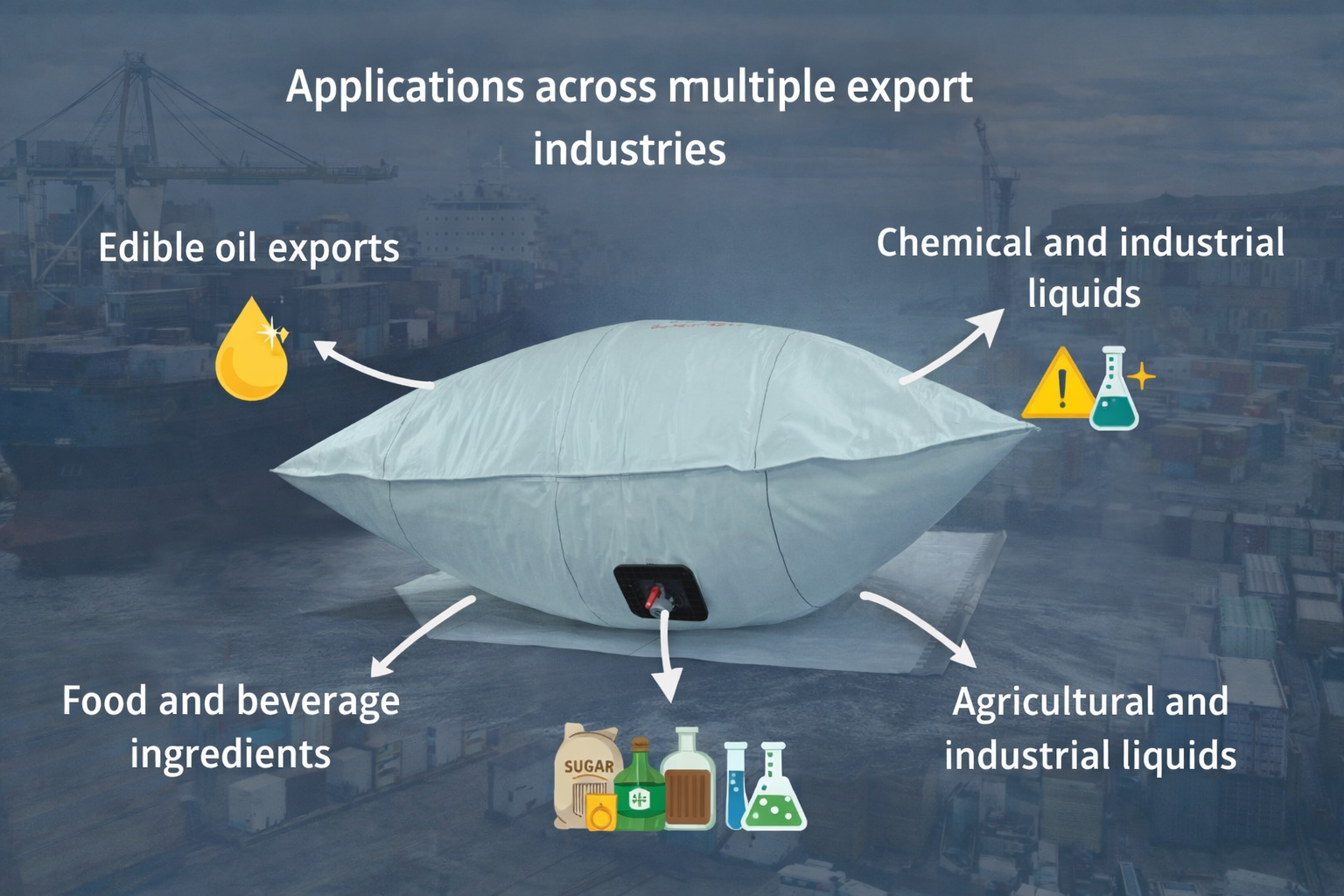
Edible Oils
Vegetable oils and palm oil can thicken in colder environments. Heater pads maintain fluidity, allowing exporters to unload cargo without delays.
Food Ingredients
Products such as molasses, glucose syrup, and corn syrup often become viscous during transit. Controlled heating helps restore flow consistency.
Industrial Liquids
Latex, wax, and certain chemical products require stable temperature conditions. Heater pads help maintain a manageable viscosity.
Agricultural and Chemical Exports
Many liquid fertilisers and additives perform better when kept within specific temperature ranges. Integrated heating systems help protect product performance.
Across these industries, heater pads for flexitank bulk liquid transport provide a practical way to maintain operational efficiency.
Why Exporters Prefer Integrated Flexitank Heating Solutions
Exporters today prioritize reliability and efficiency. Integrated heating systems reduce discharge time, minimize cargo loss, and simplify operations.
Flexitank heating solutions for bulk liquids offer several advantages:
- Faster cargo discharge
- Lower energy consumption
- Reduced product residue
- Simplified unloading process
- Improved cargo quality protection
When designed correctly, heater pads become an essential part of modern Bulk Liquid Transport systems.
Choosing the Right Flexitank Partner
Not all heating systems deliver the same performance. Exporters should work with manufacturers who understand the engineering behind flexitank heating technology.
A reliable supplier focuses on material compatibility, safe heat distribution, and tested system design. Fluid Flexitanks develops solutions that support safe and efficient cargo discharge across global shipping routes.
With advanced flexitank heating solutions for bulk liquid shipping, exporters can move viscous cargo with confidence.
Move Your Liquid Cargo Smarter
Efficient temperature control is critical for modern liquid logistics. Heater pads provide a dependable solution that improves cargo recovery and reduces unloading time.
For exporters looking to simplify Bulk Liquid Transport operations and protect product quality, choosing the right flexitank partner makes all the difference.
Explore how Fluid Flexitanks support safer and more efficient shipping solutions:
https://www.fluidflexitanks.com/why-fluid-flexitanks-for-bulk-liquid-transportation/
FAQs
- What are heater pads used for in flexitanks?
Heater pads are used to warm liquid cargo during discharge. They help reduce viscosity so that thick liquids such as oils or syrups can be pumped out easily. - How do heater pads improve cargo discharge?
By evenly heating the liquid from beneath the tank, heater pads restore fluidity and reduce resistance during pumping, allowing faster and more efficient unloading. - Are heater pads better than external heating systems?
In most cases yes. Heater pads provide more uniform heat distribution and require less energy compared with external heating methods applied outside the container. - Which liquids require heater pads in flexitanks?
Liquids such as edible oils, molasses, glucose syrup, waxes, and latex often require heating to maintain proper flow during discharge. - Can heater pads damage flexitanks?
No. When designed correctly, heater pads deliver controlled heat that is compatible with flexitank materials and safe for Bulk Liquid Transport operations.