
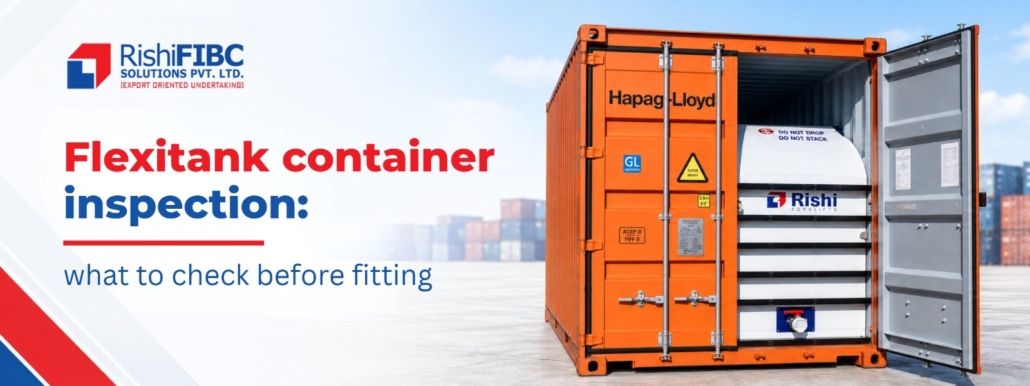
How to Inspect and Prepare a Flexitank Container Before Fitting
A flexitank is a large, flexible bag made of several polyethylene layers that turns a standard 20-foot container into a bulk liquid carrier. The bag is strong, but it can only be as safe as the steel box around it. That is why every flexitank container needs a careful inspection before fitting begins. In our experience, most leaks and cargo claims trace back to a container that someone accepted in a hurry.
Why does container inspection matter so much?
Inspection is important since a fully filled flexitank exerts continuous pressure on the container. The flexitanks that we use for the transport of bulk liquids have a capacity ranging from 16,000 to 24,000 litres, and this weight puts substantial pressure on the sides and the doors throughout the journey.
Rigid bulk liquid shipping containers such as ISO tanks carry their own strength. A flexitank works differently. It relies on the container to hold its shape, so one weak panel or sharp edge can turn into a problem at sea.
What type of container should you choose?
Choose a standard 20-foot dry container in good structural condition. For edible oils or juices, you also need a food-grade container for flexitank use. This means a box with no history of hazardous or strong-smelling cargo.
Next, look at the CSC plate on the door. The CSC plate is a metal safety approval plate showing that the container meets the International Convention for Safe Containers. Reject any container with a missing or expired plate.
How do you check the inside of a flexitank container?
Begin with a small test by going in, asking someone to close the doors, and then check whether any light is getting through the roof or the walls; even a tiny hole will allow water in and indicate the presence of rust.
After that, move slowly along the floor. Our loading crews frequently discover loose nails or broken planks which could puncture the bag when it is full. Run your hand along the lower walls and the corrugations to check for any sharp dents or bolts.
Finally, check that the box is clean and dry, with no odour. Food cargo can absorb smells from a previous load, so a container that smells of chemicals should never carry food.
Check the doors and locking bars
The doors take the most pressure when the bag settles during transit. Make sure the locking bars and cams open and close smoothly. The door seals should be complete, and the frame should have intact slots for the bulkhead.
A bulkhead is a set of steel bars and boards fitted at the door end. It holds the filled flexitank back from the doors, so it must sit firmly in place.
How should you prepare the container for fitting?
The preparation process starts by carrying out a thorough cleaning and getting rid of all the nails or staples. The floor and the lower parts of the walls should then be lined with cardboard or kraft paper; this paper layer serves as a simple liner between the steel and the bag.
Once the lining is in, match the flexitank container specifications to your cargo. Tank volume and cargo density must stay within the payload rating on the CSC plate. Our guide on how to properly load and offload your flexitank explains what happens next.
Container checklist before flexitank installation
Keep this short list handy for every flexibag container you approve:
- Valid CSC plate and suitable container grade
- No light passing through roof or walls
- Floor free of nails and broken boards
- Walls free of sharp dents and protruding bolts
- Clean, dry interior with no odour
- Working doors, locking bars and bulkhead slots
- Cardboard or kraft paper lining in place
Ship with confidence from the very first check
Although a thorough inspection does not take long it does provide protection for cargo that is worth a great deal. Shippers who carry out these steps experience fewer leaks and have smoother deliveries when using flexi tanks containers.
Fluid Flexitanks supports exporters with certified multi layer flexitanks and practical loading guidance. Find out why Fluid Flexitanks is trusted for bulk liquid transportation and talk to our team about your next shipment.
FAQ
Before fitting a flexitank, check the CSC plate, run a light test for holes, and inspect the floor for nails. Also confirm the walls, doors and locking bars are sound and the interior is clean and dry.
A standard 20 foot dry container in good structural condition is the best choice. Food cargo also needs a food grade container with no history of hazardous or strong smelling loads that could taint the product.
The CSC plate is a metal safety approval plate fixed to the container door. It confirms the box meets the International Convention for Safe Containers. A missing or expired plate means you should reject the container.
Close the doors while someone stands inside the container. If any daylight shows through the roof or walls, there is a hole or rust damage, and the container is not safe for flexitank fitting.
A cardboard or kraft paper lining protects the flexitank from sharp edges, rough corrugations and small floor defects. It adds a simple layer between the steel and the bag, which lowers the risk of punctures during transit.

