
Crude vs Refined Glycerin: Liquid Bulk Transport in Flexitanks
Glycerin moves the world in vast quantities, and the two main grades are very different in terms of how they behave in transit. Crude glycerin is dark and full of residual process stuff, whereas refined glycerin is pure enough for food and pharmaceutical use. The correct liquid bulk transport system to use for each of these is very much a matter of protecting both quality and margin. In our experience, the vast majority of shipping problems arise when the exporter treats the two grades as the same.
What is glycerin and where does it come from?
Glycerin is a thick, clear, sweet-tasting liquid. Most of it comes as a by-product of biodiesel production, with the rest coming from soap making and fat processing.
Crude glycerin is the raw stream that leaves the biodiesel plant. Refined glycerin is the same material after purification removes most of the water and impurities.
Did you know? For every 100 pounds of biodiesel produced, roughly 10 pounds of crude glycerol are created, according to farm energy research from eXtension.
That link to biodiesel is what shapes the market. As biodiesel output has increased, so too has the supply of crude glycerin (often at a faster rate than local demand can absorb). The result is that there’s been a steady increase in the amount of crude glycerin being shipped overseas to refineries and feed producers.
What is the difference between crude and refined glycerin?
The main difference is purity. Crude glycerin usually contains only part glycerol, with methanol and soaps making up much of the rest. Refined glycerin is almost pure, and suppliers sell it in grades such as USP and food grade.
| Purity | Lower, varies by plant | Very high |
| Colour and odour | Dark brown, noticeable smell | Clear, odourless |
| Common uses | Animal feed, biogas, refining | Food, cosmetics, medicines |
| Flexitank type | Standard flexitank for non hazardous cargo | Food grade flexitank |
| Key shipping care | Check SDS and methanol level | Protect purity and keep moisture out |
Because the two grades end up in such different industries, they need different care on the way there.
How does liquid bulk transport of glycerin work in a flexitank?
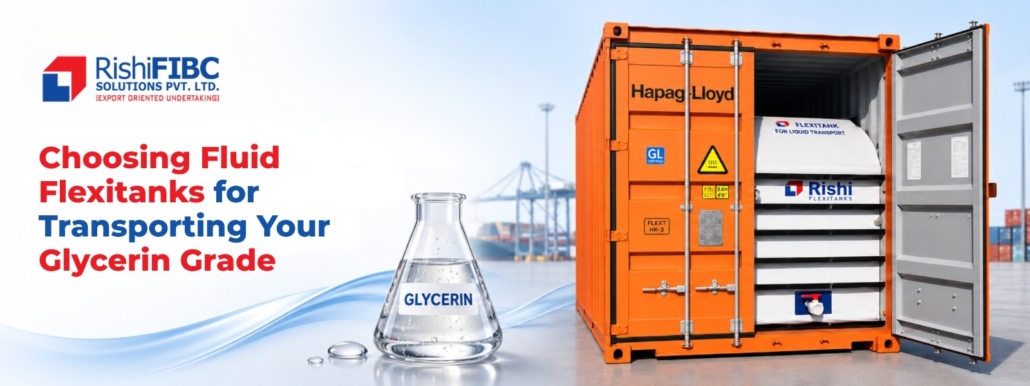
A flexitank is a large, multi-layer polyethylene bag that turns a standard 20-foot container into a sealed bulk liquid container. Our flexitanks for bulk liquid transportation hold between 16,000 and 24,000 litres, which replaces dozens of drums with one sealed unit.
The process is simple, really. Our team fit the flexitank into a container that’s been prepared, and the exporter then fills it via the valve. At destination, the receiver connects a hose and pumps the product out. For glycerin exporters in particular, it’s a much simpler and cheaper way of shipping liquid bulk than via drums or IBCS.
Crude glycerin shipping: what to check
Always check the SDS before you book. Crude glycerine can have residual methanol, and the amount can vary from plant to plant. Flexitanks are only for non-hazardous cargo, so the SDS has to confirm that.
It is often advised that exporters share a recent lab analysis early. That way, it can be confirmed that the flexitank suits the cargo before loading day. You can read more about shipping non-hazardous chemicals in flexitanks, which covers the wider rules for bulk chemical transport.
Refined glycerin bulk transport: protecting purity
Refined glycerin buyers pay for purity, so contamination is the main risk. Use a food-grade flexitank with the right approvals. Fluid offers FDA-approved flexitanks for cargo going into food and pharmaceutical supply chains.
Moisture has to be watched as well. Glycerin takes in moisture from the air, so a sealed bag with as little air contact as possible is the way to go in order to keep the grade in spec.
Cold weather and fill volume
Both grades become significantly thicker in the cold. For winter routes, a heating pad under the flexitank makes discharge at destination a lot easier. Glycerine is also heavier than water, so the fill volume has to be appropriate to the cargo density and the container payload. Get those details right, and glycerine is a very good liquid cargo to transport.
Choose a partner who knows both grades.
Crude and refined glycerin both require different handling, but both perform very well in a flexitank when the system is correctly put together. Fluid Flexitanks offer both standard and food-grade flexitanks and can supply heating pads for cold routes. Get in touch with us about your next glycerin shipment, and we’ll help you find the right solution for your grade and route.
FAQ
Crude glycerin is the raw by-product of biodiesel production and contains methanol, soaps and other impurities. Refined glycerin is purified to a very high level and sold for food, cosmetic and pharmaceutical use.
Yes, crude glycerin can go in a flexitank provided the SDS confirms it is non-hazardous. The exporter should check the methanol level and pass on a lab analysis to the flexitank supplier prior to loading.
Refined glycerin should be transported in a food-grade flexitank with appropriate approvals (e.g. FDA). The sealed bag will keep out contaminants and minimise exposure to air, thus protecting the purity and preventing the product from absorbing moisture.
Glycerin takes in moisture from the air, so moisture can actually push the refined grades outside their specification. A sealed flexitank with as little air contact as possible will keep the cargo dry from the moment of loading right through to discharge at destination.
Glycerin thickens in the winter, so that winter shipments can be quite slow to discharge. A heating pad can be placed under the flexitank at destination to warm the cargo and get it moving again, and this also helps to reduce the amount of residue left in the bag.