
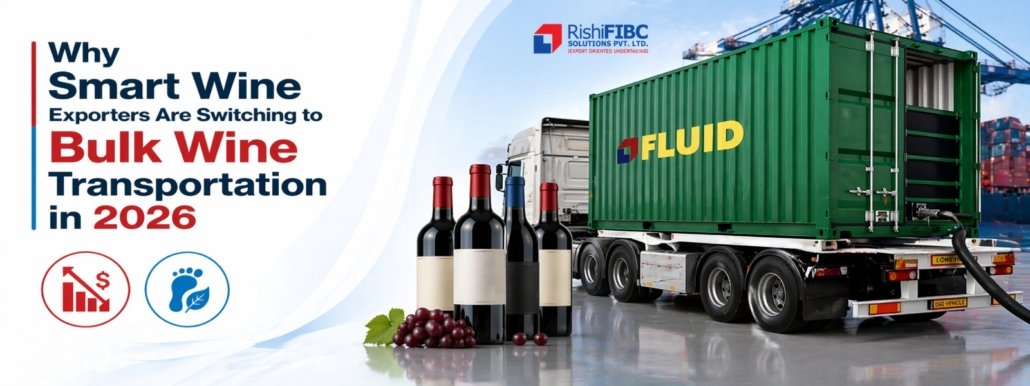
Bulk Wine Transportation vs Bottled Wine Logistics: Cost and Carbon Footprint
Every wine exporter faces the same question at some point. Do you ship in bottles, or do you go bulk?
It seems straightforward. But the answer involves money, emissions, logistics, and long-term strategy.
Bulk wine transportation is not a new concept. But it is gaining serious momentum. And for good reason.
What Is Bulk Wine Transportation and How Does It Work?
Simply put, bulk wine transportation means moving wine as a liquid commodity, before it is bottled, using large-volume containers.
The most efficient method today is the flexitank. A flexitank is a collapsible, food-grade polyethylene bladder. It fits inside a standard 20-foot shipping container. It holds up to 24,000 litres of wine.
Wine is pumped directly into the flexitank at the winery. The container is sealed. It travels by road, rail, or sea and is then pumped out at the destination for local bottling.
That is the basic model. But the implications run deep.
The Real Cost Difference Between Bulk and Bottled Wine Shipping
Let’s talk numbers. This is where bulk wine transportation makes its strongest case.
Bottled wine logistics come with layers of cost:
- Glass bottle manufacturing
- Corks, capsules, and labels
- Cardboard cartons and dividers
- Heavier freight weight per litre
- Higher breakage risk in transit
A standard 20-foot container holds roughly 10,000 bottles of wine (750ml). That translates to approximately 7,500 litres of actual wine.
A single flexitank in the same container holds up to 24,000 litres.
That is 3.2 times more wine in the same container space.
The cost of bulk wine shipping per litre is dramatically lower. Freight rates, when calculated per litre of wine, can be 30–40% cheaper in bulk. Packaging costs are almost eliminated at the origin. And destination-side bottling, while it adds a local step, is often cheaper in markets where labour and materials cost less.
For high-volume exporters, this is not a marginal saving. It is a structural cost advantage.
Carbon Footprint — Where Bulk Wine Truly Wins
The environmental case is equally compelling.
Glass is heavy. A 750ml wine bottle weighs around 400–500 grams — often more than the wine inside. When you ship thousands of bottles, you are largely shipping glass across oceans.
That weight drives fuel consumption. More fuel means more carbon emissions.
Bulk wine shipping containers eliminate this problem at the source. The flexitank itself weighs under 25 kg when empty. The wine travels without packaging. Bottling happens close to the end consumer.
Studies in the wine industry estimate that shipping wine in bulk and bottling at the destination can reduce the carbon footprint of wine transport by 40% or more compared to bottled exports. Some estimates go higher, particularly for long-haul routes like Australia to the UK or Chile to the US.
The logic is simple: you are not transporting glass, cardboard, and air across 15,000 km. You are transporting wine.
Why Fluid Flexitanks Are the Preferred Choice for Bulk Wine Transportation
Not all flexitanks are equal. Fluid flexitanks designed specifically for wine transport are built to a higher standard.
Here is what makes them stand out for bulk wine transportation:
- Food-grade material. The inner liner is made from FDA-approved polyethylene. No flavour transfer. No contamination risk. Wine integrity is preserved from pump-in to pump-out.
- Multi-layer barrier protection. Quality wine transport tanks use multi-ply construction. This protects against punctures, UV exposure, and oxygen ingress — all critical for wine quality over a 4–6 week ocean transit.
- Compatibility with wine transport tanks and fittings. Fluid flexitanks are designed for easy integration with standard pump systems. Loading and unloading are fast. Spillage risk is minimal with proper butterfly valve fittings.
- Temperature management. While flexitanks themselves do not regulate temperature, they are compatible with reefer containers. For temperature-sensitive wines, this is an important pairing.
- No return logistics. Unlike stainless steel wine transport tanks or ISO tanks, flexitanks are single-use. No empty tank needs to be shipped back. This removes a hidden cost that many shippers overlook.
Bulk Wine Shipping Containers — What You Need to Know
Before You Start
Choosing bulk wine shipping containers is not just about the flexitank. The outer container matters too.
A standard dry 20-foot container is used for most ambient bulk wine shipments. The internal dimensions comfortably accommodate a full-size flexitank. A protective liner board is installed first — this protects both the flexitank and the container.
For premium or heat-sensitive wines, a reefer (refrigerated) container is used. The flexitank fits inside the reefer in the same way. Temperature is held between 12°C and 18°C for the duration of the voyage.
Before you book a shipment, confirm:
- The flexitank supplier is certified for food-grade wine transport
- Your freight forwarder has experience with liquid bulk cargo
- The destination facility is equipped for flexitank discharge
- Your insurance covers liquid bulk cargo in transit
These are not complicated steps. But they are easy to overlook on a first shipment.
Bulk Wine Transportation vs Bottled — A Quick Side-by-Side
Factor | Bulk Wine (Flexitank) | Bottled Wine |
Volume per 20ft container | Up to 24,000 L | ~7,500 L |
Packaging cost at origin | Very low | High (glass, cork, carton) |
Freight cost per litre | 30–40% lower | Higher |
Carbon emissions per litre | Significantly lower | Higher |
Quality preservation | Excellent (food-grade) | Excellent |
Breakage risk | Near zero | Present |
Destination bottling needed | Yes | No |
Suitable for premium wine | Yes (with reefer) | Yes |
Exporters today prioritize reliability and efficiency. Integrated heating systems reduce discharge time, minimize cargo loss, and simplify operations.
Flexitank heating solutions for bulk liquids offer several advantages:
- Faster cargo discharge
- Lower energy consumption
- Reduced product residue
- Simplified unloading process
- Improved cargo quality protection
When designed correctly, heater pads become an essential part of modern Bulk Liquid Transport systems.
Is Bulk Wine Transportation Right for Your Business?
It depends on your volume and your market.
If you are shipping less than a few thousand litres per month, the logistics setup may not justify the switch. Bottled wine makes sense at smaller scales.
But if you are consistently exporting above 10,000 litres per shipment, and especially if you have a distribution or co-packing partner at the destination, bulk wine transportation is almost certainly cheaper and cleaner.
Many major wine-exporting countries have already made the shift. Australia now ships the majority of its export wine in bulk. Spain, Chile, and South Africa have followed. The trend is accelerating.
The industry is moving. The question is whether your business moves with it.
Ready to explore flexitank solutions for your wine export operation? Talk to a fluid flexitank specialist who understands the wine supply chain — not just the container business.
Move Your Liquid Cargo Smarter
Efficient temperature control is critical for modern liquid logistics. Heater pads provide a dependable solution that improves cargo recovery and reduces unloading time.
For exporters looking to simplify Bulk Liquid Transport operations and protect product quality, choosing the right flexitank partner makes all the difference.
Explore how Fluid Flexitanks support safer and more efficient shipping solutions:
https://www.fluidflexitanks.com/why-fluid-flexitanks-for-bulk-liquid-transportation/
FAQs
What is bulk wine transportation and how does it reduce shipping costs?
Bulk wine transportation means shipping wine as liquid in flexitanks before bottling. A single 20-foot container holds up to 24,000 litres — over 3x more than bottled. This drastically reduces the per-litre cost of bulk wine shipping by eliminating glass, carton, and cork costs at origin.
How do wine transport tanks (flexitanks) preserve wine quality during long voyages?
Quality wine transport tanks use multi-layer, food-grade polyethylene construction to prevent oxygen ingress, contamination, and UV exposure. For temperature-sensitive wines, flexitanks are used within reefer containers to maintain ideal conditions of 12–18°C throughout the entire ocean transit period.How much does bulk wine shipping reduce carbon emissions compared to bottled wine?
Industry data shows bulk wine shipping containers can reduce transport-related carbon emissions by 40% or more. Glass bottles are heavy — often weighing more than the wine itself — so removing them from the equation significantly cuts fuel use across the bulk wine supply chain.
- Are fluid flexitanks suitable for transporting premium wine in bulk?
Yes. Fluid flexitanks designed for bulk wine transportation are FDA-approved, food-grade, and compatible with reefer containers. Many premium wine exporters in Australia, Chile, and South Africa use flexitanks successfully, proving that quality is fully preserved during long-haul bulk wine shipping operations.

